If you finish a shift with aching heels and a sore lower back, the problem is usually not your stamina — it is your shoes. Standing is harder on your body than walking, because walking pumps fresh blood through your legs with every step while standing leaves the same muscles loaded all day. The right shoe changes that. Here is what to look for, feature by feature.
Cushioning That Recovers
The midsole is the part of the shoe between the outer sole and your foot, and it is where fatigue is won or lost. You want foam that compresses under load and springs back — EVA and similar midsole foams do this well. Press your thumb into the midsole through the insole: if it feels like pressing a car tire, it will not absorb much; if it feels completely mushy, it will not support you. You want the firm middle ground.
One warning: cushioning compresses permanently over months. If you stand all day in the same pair daily, plan to replace them every 8–12 months even if they look fine.
Arch Support Matched to Your Foot
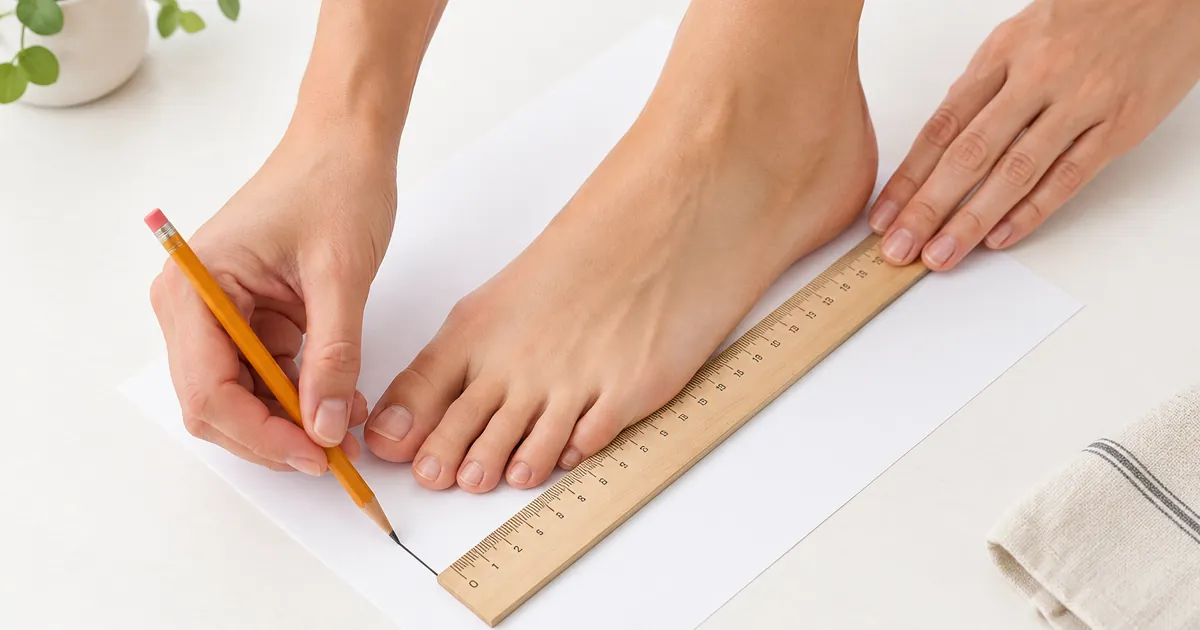
Flat feet need a raised arch contact to keep the foot from rolling inward; high arches need cushioning more than structure because the arch itself does not touch the ground. Neutral feet do well with moderate support. If you are unsure of your arch type, the footprint test in our foot type guide takes two minutes.
A removable insole is a quiet superpower: it lets you swap in an aftermarket arch support without changing shoes. Check product pages for insoles that lift out.
A Roomy, Correct Toe Box
Feet swell up to a half size during a long shift. A toe box that fits at 9 a.m. pinches by 3 p.m., and pinched toes mean sore feet and bunions over time. Look for a toe box tall enough to let your toes wiggle and long enough for a thumb's width of space. If you are between sizes, size up for work shoes — nobody sees your work shoes' extra half size, but your feet feel it every day.
Grip and Stability
Standing workers move on hard floors all day — tile, concrete, polished wood. You need an outsole with real tread and a sole that grips both dry and wet surfaces. Avoid completely flat, smooth soles on slippery floors, and avoid heavy lugged hiking-style soles indoors, which feel clunky and catch on edges. A low-profile tread pattern with visible grooves is the sweet spot.
Also check the heel: a slightly wider heel base adds balance during long shifts, which reduces the small stabilizing muscle work that tires your legs out.
Breathable Uppers
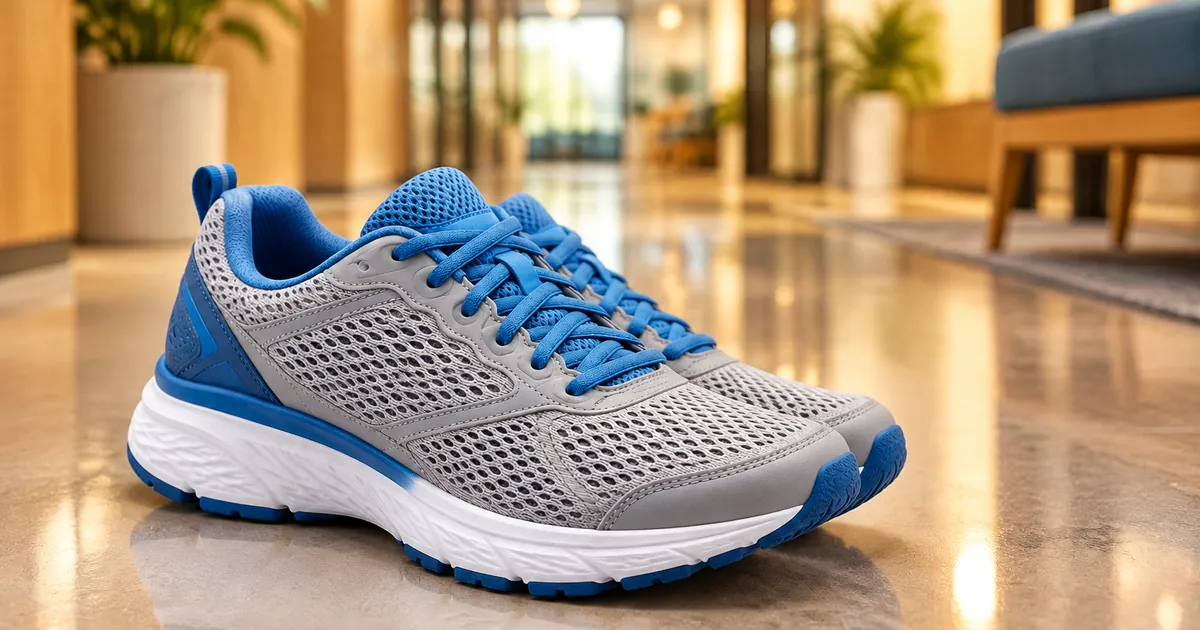
Eight hours in a non-breathable shoe creates heat, moisture, and odor. Mesh and knit uppers move air best; full leather breathes less but handles dress-code settings. If your workplace requires leather looks, look for pairs with moisture-wicking linings and rotate two pairs so each dries fully between shifts.
Fit Details That Matter After Hour Six
- No seams over pressure points: a seam across the little toe is invisible at hour one and painful at hour six.
- Padded collar and tongue: stops the top edge of the shoe from digging into your ankle as your feet swell.
- Secure closure: laces you can adjust mid-shift beat slip-ons for swelling feet, though a well-fitted slip-on works for narrower feet.
- Weight: every extra gram on your foot costs measurable energy over a shift. Lighter is better, as long as cushioning does not suffer.
What to Avoid for Long Shifts
- Completely flat, thin-soled fashion sneakers — no shock absorption at all
- New shoes worn straight into a full shift — break them in over a week of short wears first
- Worn-out pairs — if the midsole creases and stays creased, the cushioning is dead
- Sizing down for a "snug" feel — swelling will make snug painful
Putting It Together
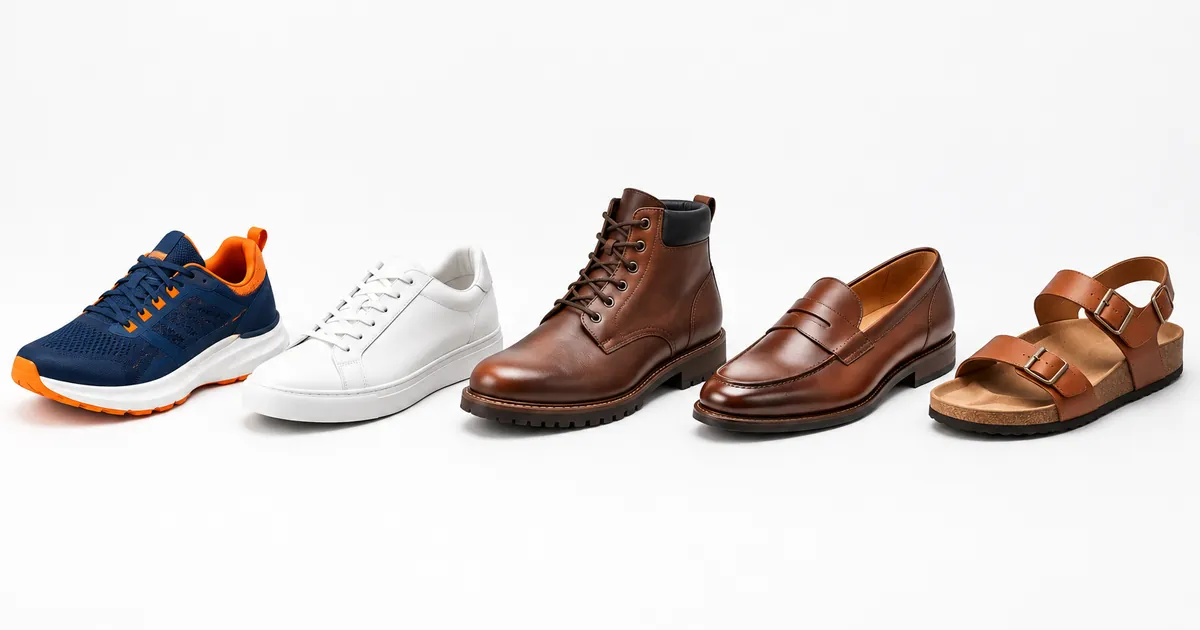
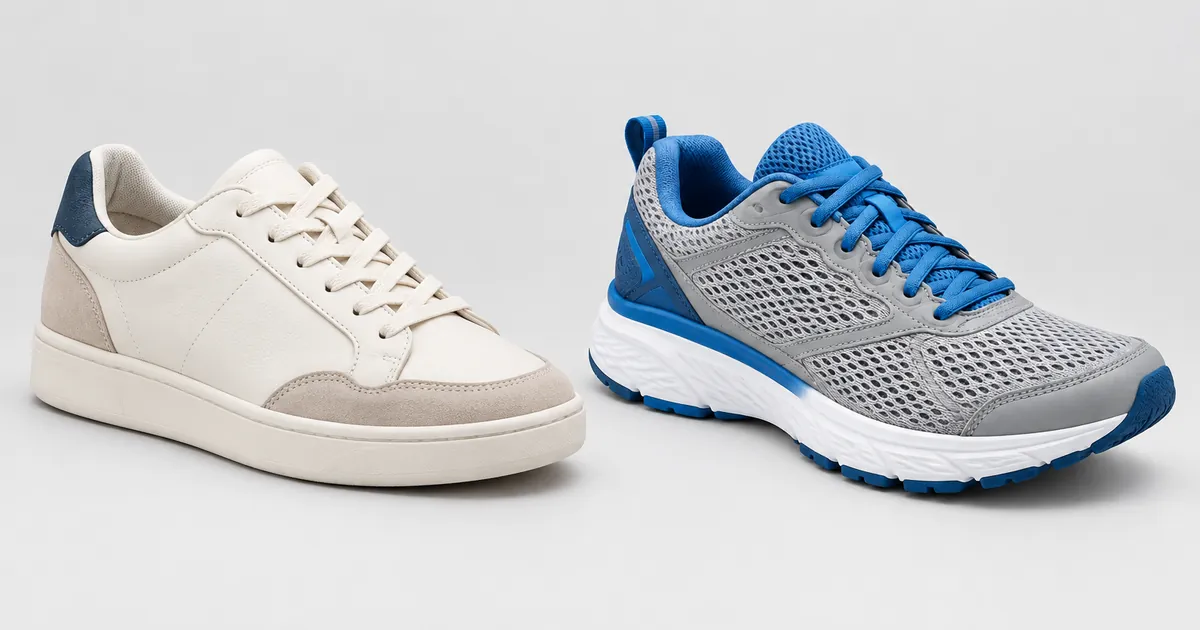
For most standing workers, the winning combination is a breathable mesh or knit upper, a cushioned but stable midsole, a roomy toe box, and a grippy low-profile outsole. Our running shoes collection and casual sneakers collection both include pairs built around exactly those features — for example, the Men's Breathable Running Sneakers combine a cushioned sole with an airy mesh upper that suits long shifts.
If your workplace needs a leather look, the leather shoes collection includes cushioned options that pass dress codes without the flat, hard soles of traditional dress shoes.
One Last Habit
Even the best shoe works better with small habits: shift your weight and change position every 20–30 minutes, stretch your calves on breaks, and compression socks help many standing workers by the end of a long week. Shoes are the biggest lever, but they work best alongside these.
Your feet carry you through every shift. Give them a pair that is actually built for it — start with all shoes and look for the features above.
Matching Shoes to Your Workplace
The best standing shoe also depends on your floor. Healthcare and retail workers on hard tile benefit most from maximum midsole cushioning and slip-resistant outsoles — look for tread patterns described as slip-resistant and prioritize the plushest stable sole you can find. Warehouse and light-industrial settings add safety needs: a thicker, more durable outsole and a toe box with some structure matter more than looks. Teachers and kitchen staff split the difference — cushioning plus easy-clean uppers that survive spills.
If your shifts alternate between surfaces, choose the more demanding surface as your baseline. A shoe that handles eight hours on concrete will handle a day of errands effortlessly, but not the reverse — which is why our casual sneakers with cushioned midsoles are the most common choice for mixed-duty weeks.